How we work 2026-05-19
Why we publish our prices
Every agency has a reason not to. Here is the arithmetic that made us put the bands back on the site after seven years without them.
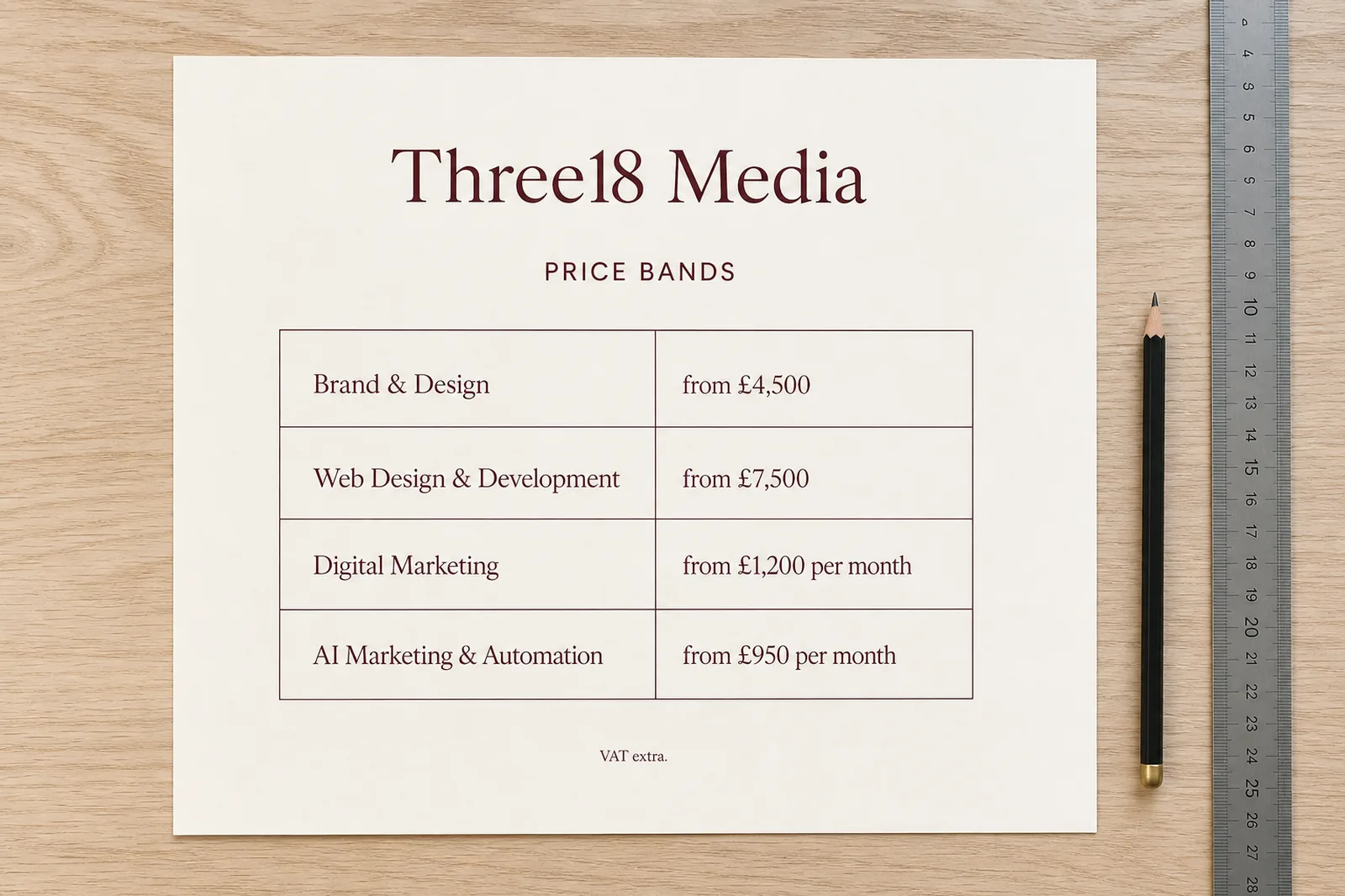
There are three standard objections to putting prices on an agency website, and we have used all three. Every project is different. Competitors will see them. Clients will anchor on the lowest number and negotiate down from there. They are all true, and they are all outweighed by the arithmetic.
Here is the arithmetic. A discovery call costs about ninety minutes once you include the preparation and the write-up. Before we published bands, roughly two in five of those calls ended with a budget that was never going to reach the entry point for what the client actually needed. Nobody was at fault; they simply had no way of knowing until they asked, and asking meant booking a call. That is several days a year of two people’s time spent arriving at a conclusion that a line of text could have delivered in four seconds.
The counter-argument is that some of those conversations turn into something. A few do. But the ones that turn are the ones where the budget was closer than the client thought, and a published band with a clear explanation of what moves it gets to that outcome faster than a call does. We now get fewer enquiries and a materially higher proportion of them are viable.
On anchoring: it is real, and the answer is not to hide the number, it is to publish what moves it. A band on its own invites a client to assume they are the cheap end. A band with three named factors that move a project up it invites a conversation about which of those factors applies to them, which is the conversation you wanted anyway.
On competitors: they can already find out. Any agency that wants our pricing can ask a former prospect, and most do. The information asymmetry runs the other way in practice, and defending it costs you the trust of everyone who is not a competitor.
We published prices from 2017 to 2019, stopped during a rebuild, and have now put them back. Stopping was the mistake. Reinstating them is not a stunt, it is a return to something that already worked once, and there is a reasonable case that removing it is the single most expensive decision this studio has made.
Written by Shane Powell